
Breast Cancer Awareness Month
September 24, 2026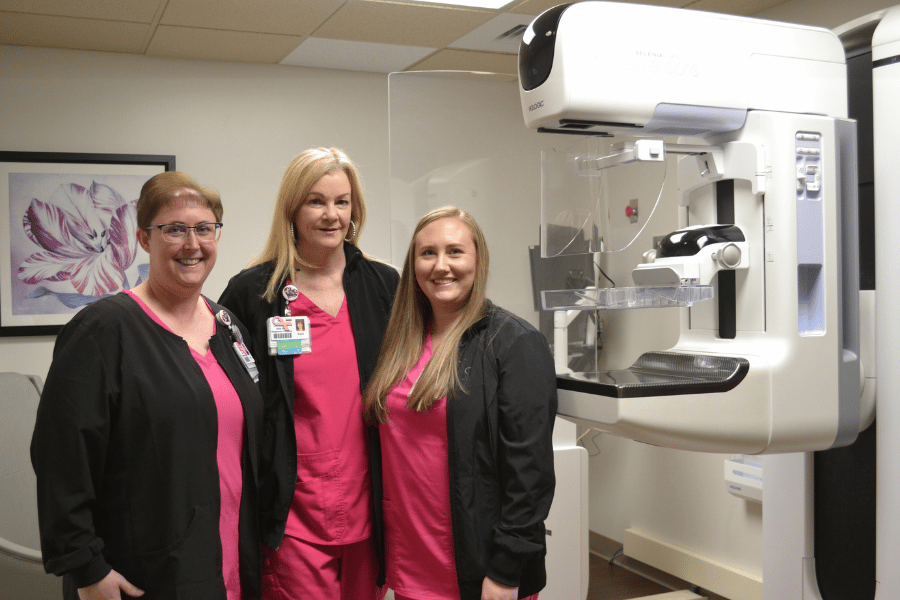
By: Dr. James Robb, OB/GYN
Sandy George and her daughter, Missy Bishop, share a lot of meaningful family traditions: herb gardening, decorating, design. When Bishop asks her mom for a recipe, it usually means that George comes over to cook it by memory, and the mother and daughter duo measure out all the ingredients to write it down for future generations.
Over the years, they have come to value another important family tradition: getting their annual mammograms at Saline Memorial Hospital.
That’s because Sandy George is a breast cancer survivor. About 11 years ago, she came in for what she thought was going to be a routine mammogram. This time, she was called back in for an additional follow-up, and a biopsy revealed that the findings were cancerous. Thankfully, after a lumpectomy and radiation treatment, she is now living cancer free.
She said she is forever grateful to Patti Chilton and the mammography team at Saline Memorial Hospital for catching the cancer in early stages.
“Early detection saves lives,” George said.
George's experience reflects what research has shown for years: when breast cancer is found early, treatment is often more successful.
According to the American Cancer Society, the five-year survival rate for women with localized cancer, which is cancer that has not yet spread to any other area of the body, is 99%. The survival rate for regional cancer that has spread to nearby organs drops to 86%, and distant cancer that has spread to other regions of the body falls to 31%.
If you're thinking about scheduling your first mammogram, here's what you should know.
What is a mammogram?
A mammogram is a low-dose x-ray of your breast, designed to spot abnormalities that may be signs of cancer. Once it reaches a later stage, breast cancer might feel like a small, hard lump in your chest, but in early stages it may feel like nothing at all. By scheduling preventive screenings, you are more likely to detect breast cancer in these early stages, when treatments are most effective.
When should I get a mammogram?
Most women should get their first mammogram at age 40. After that, you should schedule a mammogram every one to two years, depending on your age, genetic history, and other risk factors. Women who are at a higher risk of cancer should be screened each year, while women who are 55 or older may only need to get their mammogram every two years. Ask your primary care provider what screening schedule is right for you.
What happens during my mammogram?
When you arrive for your mammogram, you will undress from the waist up and change into a gown. Make sure not to wear any deodorants, lotions or perfumes on your upper body on the day of the exam, as these may interfere with the screening process.
A female technician will help you position your breasts one at a time between two plastic imaging plates. These plates will gently squeeze your breast, flattening the tissue as your technician takes x-ray pictures from multiple angles. This process will take 20 to 30 seconds. You may feel some discomfort, but it’s important to remain in this position as it allows for clearer images using less radiation.
Once your screening is complete, a radiologist will review your x-rays and send your doctor a report. If your doctor spots something unusual, they may request a second mammogram or a breast ultrasound. Remember: most suspicious findings are not cancer. It’s common to get unusual findings after your first mammogram, because your doctor does not have previous images for comparison. Often, an unusual finding is just a spot of dense tissue or the result of an unclear image.
If this is your first mammogram, don’t worry! Some women feel concerned that the screening will be painful, but today’s medical equipment is designed to make your experience as comfortable as possible. Celebrate Breast Cancer Awareness Month by scheduling your mammogram this October and know that you’re taking an important step in managing your breast health for the years to come.
For George's family, that message has been passed from one generation to the next. Through her mom’s experience, Bishop learned the value of mammography, and that was further reiterated a few years ago when an abnormal finding was discovered during her own mammogram. Thankfully, it was not cancerous.
“We know we can trust the team at Saline Memorial Hospital to take care of us,” Bishop said. “We are both committed to staying on top of our health so that we can enjoy more time together and with our family, friends and loved ones.”